01
If you work in marketing
And sometimes you feel the discipline became smaller than it could be: funnels, metrics and formulas for three-second windows, while the original question goes unanswered.
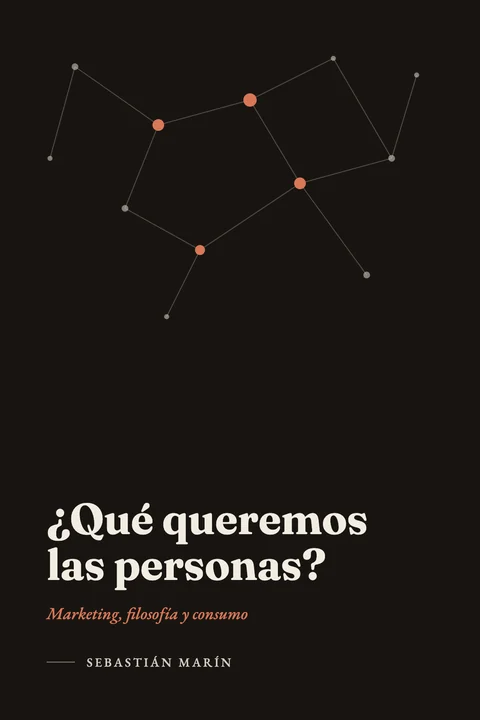
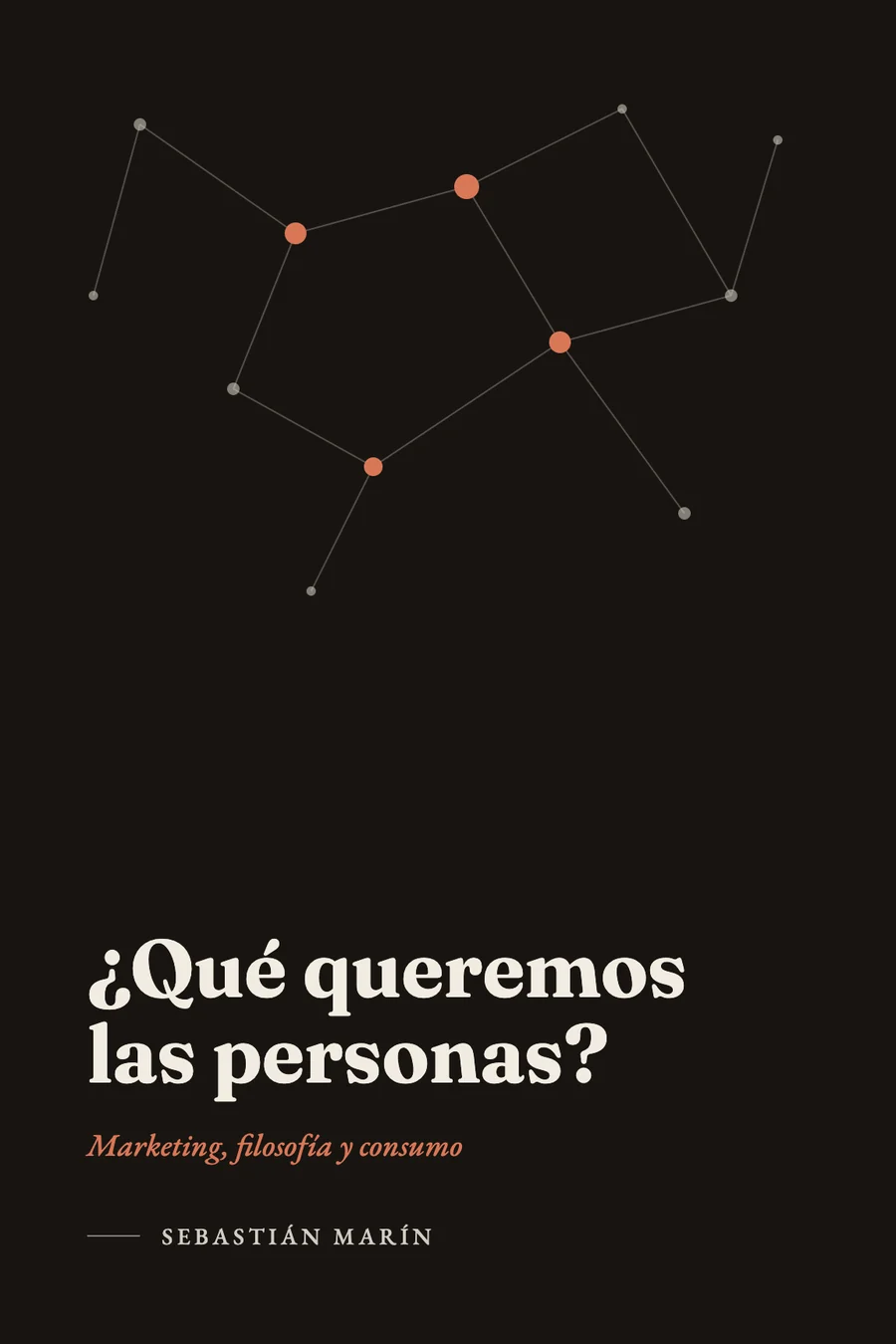
Marketing, philosophy and consumption
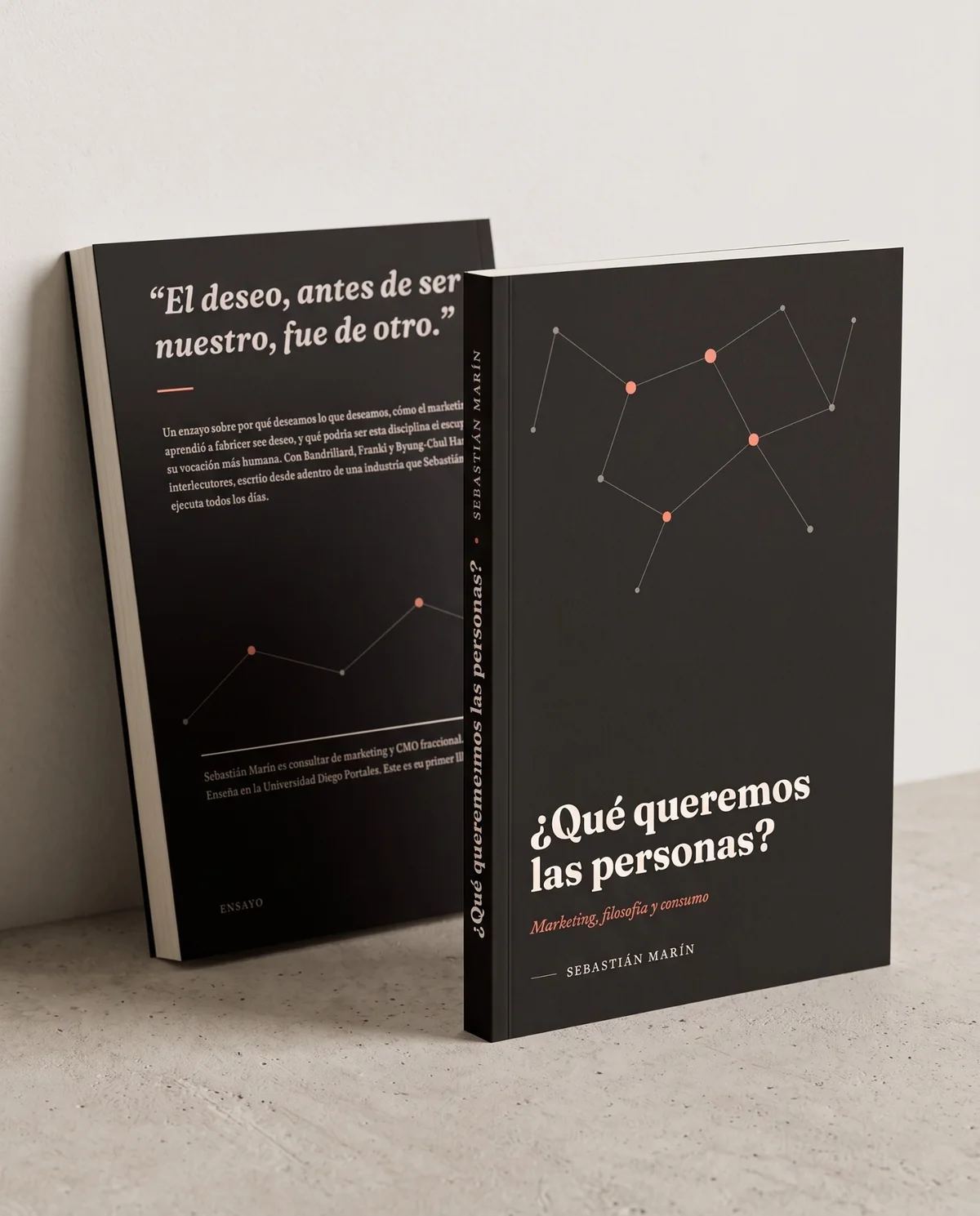
“Desire, before it was ours, belonged to someone else.”
Why we desire what we desire, how marketing learned to manufacture that desire and what this discipline could be if it recovered its most human vocation. The book is written in Spanish.
Bonus: with your purchase, 30 minutes with me on your business questions. How it works
By Sebastián Marín · Marketing consultant and lecturer at Universidad Diego Portales
“I found it a beautiful book, for someone like me who is not a marketer. It taught me to give real value to what I sell and how to make my audience perceive the same.”
“I remembered that quality beats quantity when I want to sell. I devoured it.”
Before wanting something we almost never ask where that wanting comes from. This book starts from that uncomfortable question: am I the one who desires, or is there something installed in me that desires for me?
From there it traces how marketing learned to inhabit desire: from the square to the algorithm, from advertising that whispers to advertising that shouts, from brands that sell objects to brands that sell belonging. And it asks what is lost when it is done badly, and what marketing could be if it started listening again.
With Baudrillard, Frankl and Byung-Chul Han as interlocutors, it is written from inside an industry that Sebastián practices every day. That is why it mixes philosophy with a planner he never used, a pair of orange sneakers and an agency that lasted seven months.
The chapters use well-known cases and almost no jargon. You do not need to have studied marketing.
And sometimes you feel the discipline became smaller than it could be: funnels, metrics and formulas for three-second windows, while the original question goes unanswered.
To look at your own offer from the other side of the counter: what you promise, what you deliver and where your customer's regret begins.
Apple, Moleskine, Nike, Liquid Death, Patagonia and Temu work as cases to discuss in class or in a team meeting. The chapters are short and stand on their own.
To ask yourself a question the market will never ask you: does this thing I want come from me, or was it installed from outside?
The first chapter, as it appears in the print edition (in Spanish), with an English translation. If it grabs you, the rest is one click away.
Keep reading on AmazonThere is a question we almost never ask ourselves before wanting something: where does this desire come from?
Not the question about what we want, we ask ourselves that all the time. The other one, the most uncomfortable: who is wanting, really? Am I the one who desires, or is there something installed in me that desires for me?
The answer, if one stops to look at it head on, is disturbing. Most of what we desire was not born in us. It was born somewhere else: in the gaze of someone we admire, in a cultural story we absorbed without a filter, in an image that told us who we should be. Desire, before it was ours, belonged to someone else.
In the second half of the twentieth century, the philosopher and anthropologist René Girard proposed an idea that unsettled almost every field it touched: we do not desire objects directly. We desire them through others. There is always a third party in the equation, someone real or imaginary whose desire orients us and points out what is worth wanting.
Girard called it mimetic desire. Mimetic because it is imitative, because it copies. We do not desire because something is objectively missing from us. We desire because we see that someone else has it, or wants it, and that activates something in us we did not know was asleep.
The mechanism is as old as the species. Children learn to desire by watching their parents. Teenagers learn by watching their peers.
Hay una pregunta que casi nunca nos hacemos antes de querer algo: ¿de dónde viene este deseo?
No la pregunta sobre qué queremos — esa nos la hacemos todo el tiempo. Sino la otra, la más incómoda: ¿quién quiere, en realidad? ¿Soy yo el que desea, o hay algo instalado en mí que desea por mí?
La respuesta, si uno se detiene a mirarla de frente, es perturbadora. La mayoría de lo que deseamos no nació en nosotros. Nació en otro lugar — en la mirada de alguien que admiramos, en un relato cultural que absorbimos sin filtro, en una imagen que nos dijo quiénes deberíamos ser. El deseo, antes de ser nuestro, fue de otro.
En la segunda mitad del siglo XX, el filósofo y antropólogo René Girard propuso una idea que incomodó a casi todos los campos que tocó: no deseamos los objetos directamente. Los deseamos a través de otros. Hay siempre un tercero en la ecuación — alguien real o imaginario cuyo deseo nos orienta, nos señala qué vale la pena querer.
Girard lo llamó deseo mimético. Mimético porque es imitativo, porque copia. No deseamos porque algo nos falta objetivamente — deseamos porque vemos que otro lo tiene, o que otro lo quiere, y eso activa en nosotros algo que no sabíamos que estaba dormido.
El mecanismo es tan antiguo como la especie. Los niños aprenden a desear mirando a sus padres. Los adolescentes aprenden mirando a sus pares.
From the origin of desire to an ethics for marketing, by way of the algorithm, luxury and the question of happiness. Chapter titles translated from Spanish.
“There are objects we use and objects we are.”
“We buy the sensation and put a rational label on top so we can look in the mirror without discomfort.”
“The noise that tried to capture attention ended up destroying the attention it needed to capture.”
“Shadows, curiously, hurt more when they leave.”
“The line is where the customer's regret begins.”
“We all sell. We all buy. We all desire things without always knowing where they come from.”
Sold on Amazon. One click and you land on the book's listing.
Purchase and shipping handled by Amazon.
A book sells mostly because someone recommends it.
If you need several copies, write to me and we will work it out.
If you have a concrete question about your business, we work on it together in a free 30-minute session.
One session per buyer. It is a thank-you for the purchase and does not depend on reviews or ratings.
Don't have it yet? Buy it on Amazon
It is an essay, with no formulas or steps to follow. It starts from real stories (a planner bought through Instagram, a pair of orange sneakers, an agency that lasted seven months) to ask where what we desire comes from and what marketing does with that desire.
No. It is written for anyone who buys, sells or has ever regretted a purchase. The chapters lean on well-known cases such as Apple, Nike, Coca-Cola, Patagonia or Liquid Death, and the technical vocabulary is minimal.
It is about 20,000 words spread over 16 short chapters. You can read it in an afternoon or two, or at a pace of one chapter a day.
Not at the moment. The book is written and published in Spanish. The excerpt and quotes on this page are translations to help you decide.
On Amazon. The button on this page takes you straight to the book's listing.
You buy the book on Amazon and send your order number in the bonus form. When you finish, you choose the time for your session. It is one session per buyer, to talk through a concrete question about your business.
Yes. The chapters are short and stand on their own, which makes them work well for discussion in class or in a team. If you need several copies, write to seba@sebastianmarin.net.
Sixteen chapters to look more clearly at what we buy, what we sell and what we really seek.